Alison Stigora
 Alison Stigora•January 31, 2024
Alison Stigora
Alison Stigora•January 31, 2024
Alison Stigora is a site-specific artist who explores relationships between physical spaces, materials, and the body. Often using found and natural objects, her work evokes awareness of the human scale within the expanse of the natural and constructed world. Emphasizing the transformation of familiar materials, Stigora creates worlds simultaneously vast and intimate, inviting viewers to pause and notice themselves and their environment in new ways. Stigora is a Seattle resident from the East Coast who holds an MFA from the Pennsylvania Academy of Fine Arts. She enjoys working on large-scale projects with others and has collaborated with architects, composers, engineers, dancers, and lighting designers to develop her projects. Previous installations include projects at the Philadelphia International Airport, MadArt Studio, and Nes Artist Residency (Iceland); permanent works can be found at Arte Sella Sculpture Park (Italy), Blackfoot Pathways Sculpture Park (Montana), and Domaine de Chaumont sur Loire (France).
“Light is a material. It changes our experience of space; it can create space. The same is true for sound. I recently began incorporating light and audio components in my sculptures following a summer residency in Iceland. The intensity of light there was disorienting in its beauty. These elements engage multiple senses, calling viewers to pay attention as color and sound subtly shift, like the experience of watching a sunrise or listening carefully for unseen wildlife. I am curious how multi-sensory components influence our experience of environments, and how vour response to materials and one another changes when presented in an unexpected context. I am interested in what makes people slow down. I want to change my own pace. The sculptures I create are contemplative spaces, inviting viewers to pause and linger in the experience. “When I’m creating works outdoors, light is often a surprise. For “Clearing,” I had no idea the doorway would glow as it does. The roof of the sculpture is open, so the interior of the piece became like a bowl of light. The exterior darkness of the burnt wood absorbed light, and the contrast at the threshold was palpable, stepping into brightness.”
“I follow a lot of architects and pay attention to how they incorporate forms and materials into the landscape. I appreciate natural materials and allowing the raw beauty of wood, stone, or concrete to be seen. I constantly think about how people move through spaces, which is a very ‘architect’ way of thinking. I consider the impact my installations have not only on people’s physical movement and experience but also on the emotional and psychological impact of the space.”
“The spaces we inhabit influence our daily existence. Whether places we choose to live, or locations passed through without thinking, every space has a form that impacts us consciously or subconsciously. The sculptures I create are contemplative spaces, inviting viewers to pause and linger. Amid a demanding and fast-paced society art provides a respite, a space to physically slow down and notice what we overlook. This could be as simple as seeing beauty in castoff materials, paying attention to a sound or color, or noticing the way we carry our bodies in unfamiliar settings.”
“My work draws inspiration from the natural world and the human body's experience in wilderness landscapes. There’s no shortage of epic landscapes in the Pacific Northwest calling us to awe and wonder and reminding us that we are small in the grand scheme of things. This sense of relative scale is part of the reason I’m drawn to create large, immersive works. “Large-scale projects necessitate working with a team. I enjoy working collaboratively with others on big, ambitious projects. It’s important that my works are tied to the places and communities where they are created. I’ve worked with firefighters, dancers, students, architects, engineers, musicians. Each time, I learn something new.”
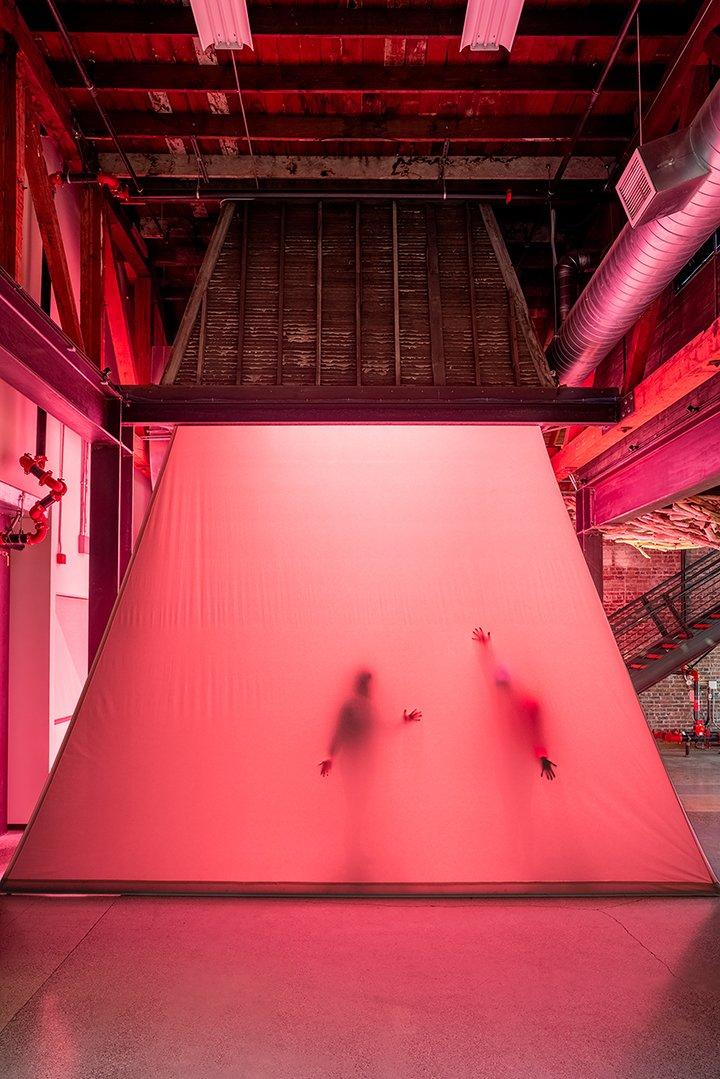
driftwood, scrim, LEDs, audio component, audio created in collaboration with Rachael Fasano; 54'x52'x24'
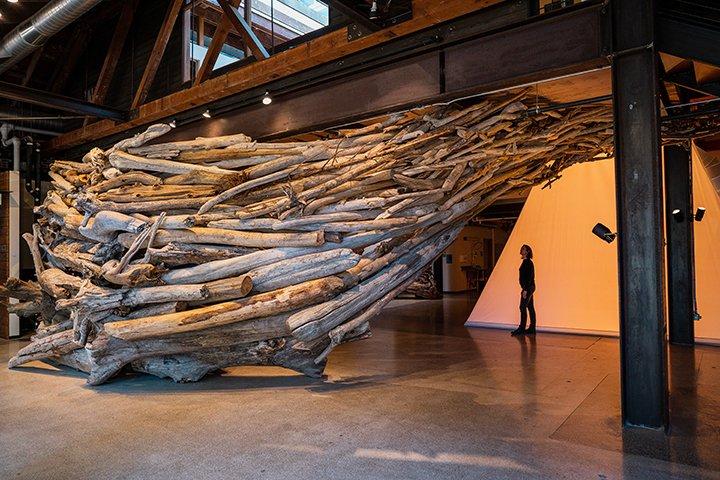
driftwood, scrim, LEDs, audio component, audio created in collaboration with Rachael Fasano; 54'x52'x24'
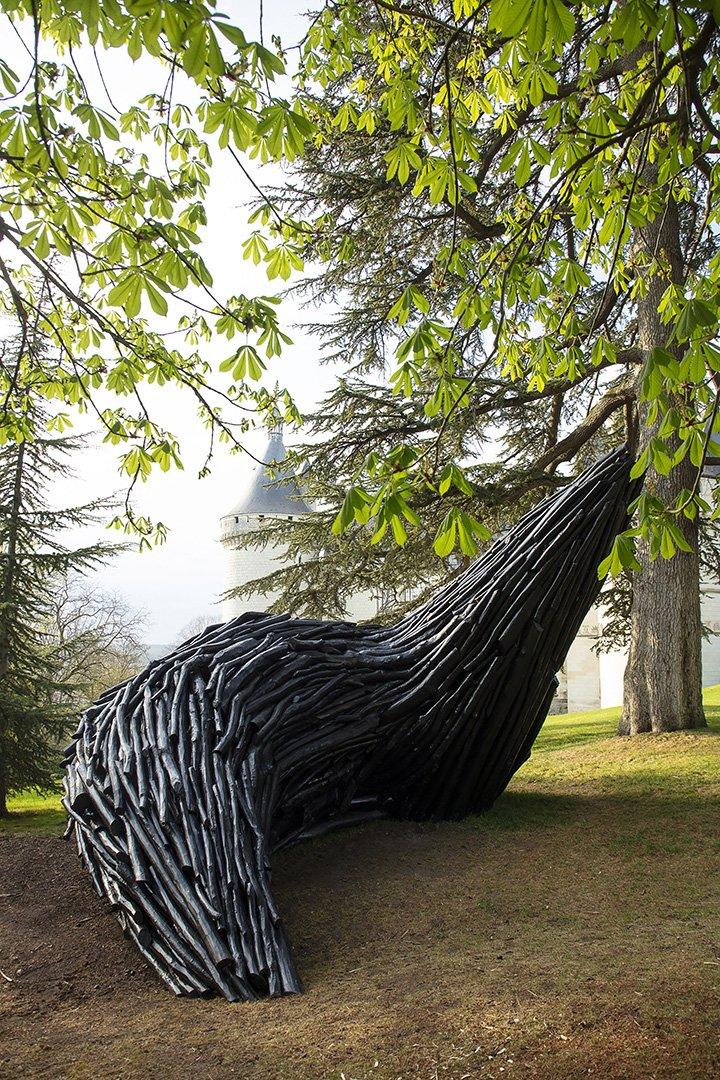
Blackened Acacia Wood; 20'x10'x10'
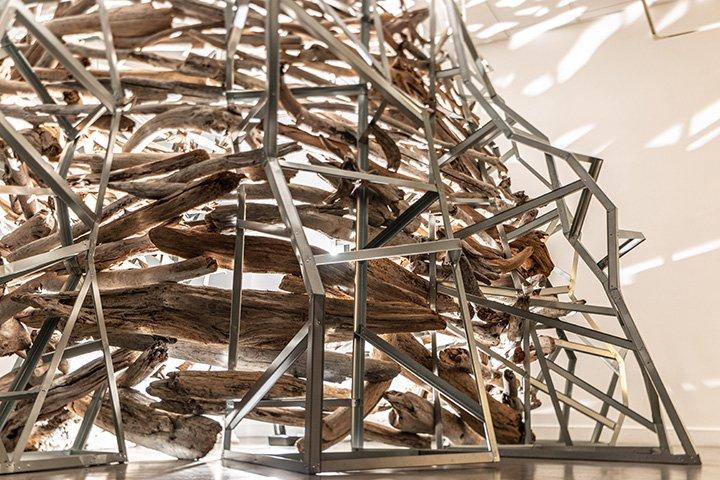
galvanized steel, driftwood, LED light; 11’x13’x14’
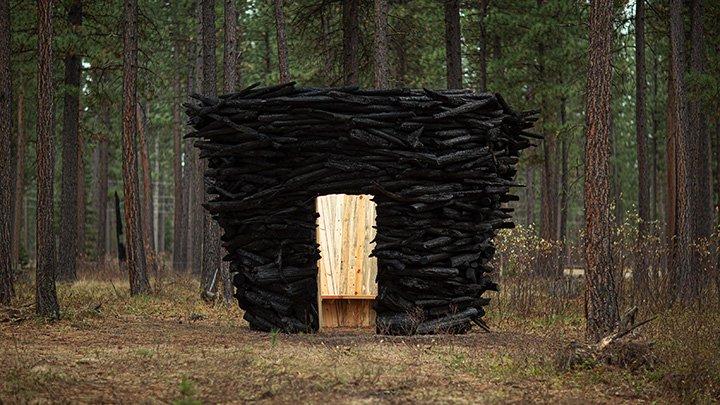
galvanized steel, driftwood, LED light; 11’x13’x14’
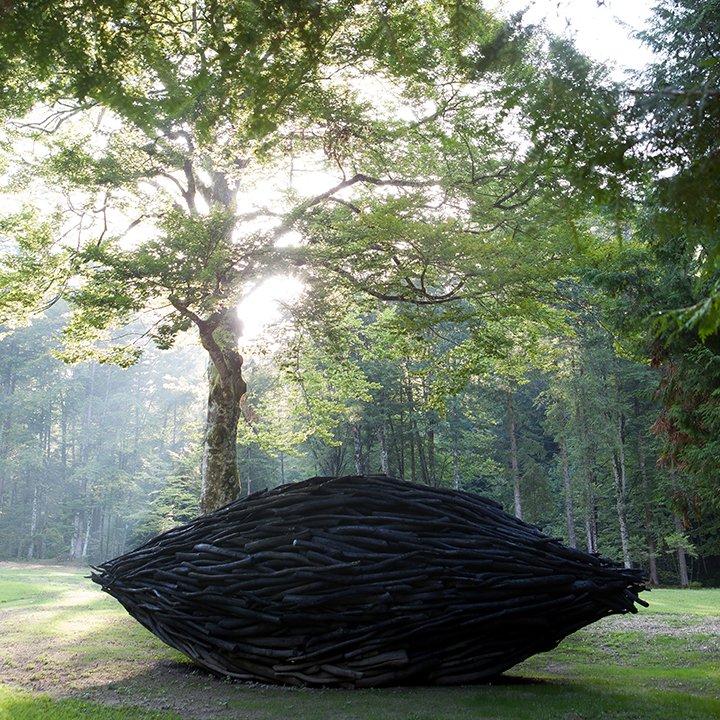
burnt Acacia wood; 17'x17'x9'